All-on-4: Biomechanics of Tilted Implants and Immediate Loading Protocol — A Complete Clinical Guide
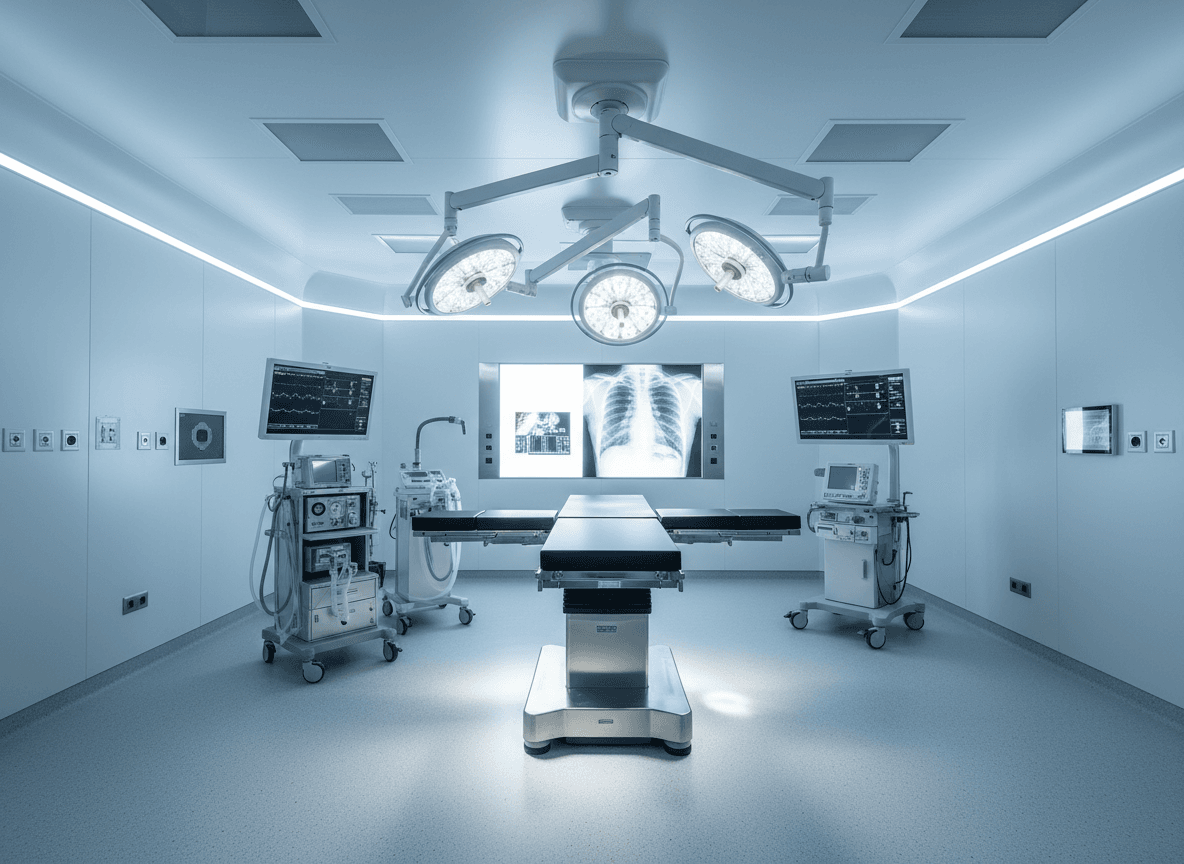
Since Paulo Maló's landmark 2003 publication, the All-on-4 concept has transformed implant-supported rehabilitation for fully edentulous patients. Understanding the biomechanics of distally tilted implants at 30–45° is essential to mastering indications, planning surgery and anticipating complications.
Since Paulo Maló et al.'s landmark publication (Clinical Implant Dentistry and Related Research, 2003), the All-on-4 concept has fundamentally transformed implant-supported rehabilitation for fully edentulous patients. In 2024, more than 750,000 All-on-4 rehabilitations have been performed worldwide according to Nobel Biocare data, with 10-year implant survival rates ranging from 94.8% to 98.2% across published series. Understanding tilted distal implant biomechanics, mastering the surgical protocol and managing immediate loading are the three pillars that determine the quality of the outcome.
1. Biomechanical Rationale: Why Tilt the Distal Implants?
The All-on-4 concept is based on placing 4 implants in the anterior zone of the jaws: 2 axial (vertical) implants anteriorly and 2 implants tilted at 30–45° distally. The distal tilting of posterior implants pursues three fundamental biomechanical objectives. First, it avoids critical anatomical structures — maxillary sinuses and nasopalatine canal in the upper jaw, inferior alveolar nerve in the mandible — without recourse to extensive bone grafting. Second, it increases the anteroposterior (AP) spread between the most anterior contact point and the most posterior implant emergence, reducing the lever arm of posterior cantilevers according to the force distribution formula: σ = F × d / Z (where d is the lever arm distance and Z the prosthesis resistance modulus). Third, the angulation anchors the implant in denser basal cortical bone rather than crestal cancellous bone, improving primary stability — the critical parameter for immediate loading.
2. Pre-operative Planning: CBCT, DSD and Surgical Guide
Every quality All-on-4 rehabilitation begins with rigorous three-dimensional planning. The CBCT assessment (minimum 16 × 13 cm field of view to capture both arches and adjacent structures) allows evaluation of available bone volumes, bone density (Lekholm & Zarb D1–D4 classification), precise location of anatomical structures and the ideal angulation of distal implants. This radiological assessment is coupled with Digital Smile Design (DSD): the final position of the prosthetic teeth retrospectively guides implant positioning ("Prosthetically-driven implantology"). Fabrication of a 3D-printed surgical guide — tooth-and-mucosa supported or bone-supported depending on the degree of resorption — faithfully transfers the virtual planning to the surgical site, with documented angular error margins of ± 1.8° (static tooth-supported guide).
3. Surgical Protocol Step by Step
- Locoregional anaesthesia (inferior alveolar nerve block + peripheral infiltrations) or IV conscious sedation per anaesthetist protocol
- Extraction of residual teeth and removal of fractured roots (if necessary)
- Full-thickness mucoperiosteal flap — midcrestal incision + vertical releasing incisions distally
- Osteoplasty for levelling: regularisation of the bone crest to obtain a horizontal platform of cortical bone quality
- Drilling of anterior axial implants (positions 3-3 at the mandible, 4-4 at the maxilla) — specific drilling protocol per diameter/length (typically Nobel Active or Straumann BLX Ø 4.0–5.0 mm × 10–16 mm)
- Drilling of tilted distal implants: orientation at 30–45° per surgical guide, intraoperative angular verification with depth gauge and radiological control
- Placement of all 4 implants — target insertion torque ≥ 35 N·cm to authorise immediate loading (Nobel Biocare protocol); target ISQ ≥ 65
- Connection of angled multi-unit abutments (MUA 17° or 30°) to correct implant angulation and parallelise prosthetic axes
- Intraoral impression or scan of MUA abutments for provisional prosthesis fabrication
- Hermetic closure by interrupted or mattress sutures (Vicryl 3-0) — verification of absence of tension on the flap
- Loading within 24–48 hours: delivery of PMMA provisional prosthesis reinforced with titanium or fibreglass framework
4. Immediate Loading Criteria: The 35 N·cm Rule
Immediate loading — prosthetic function within 48 post-surgical hours — is the fundamental promise of the All-on-4 concept for the patient ("Teeth in a Day"). It is only possible subject to sufficient primary stability. Current scientific consensus (ITI Consensus Conference, 2023; European Association for Osseointegration, 2024) establishes the following criteria: insertion torque ≥ 35 N·cm for all implants, ISQ (Implant Stability Quotient, measured by resonance frequency analysis with Ostell or Osstell Beacon) ≥ 60–65, absence of peri-implant bone defect ≥ 2 mm, and D1 to D3 bone quality. If torque is insufficient on an isolated implant (D4, very cancellous bone), two options: abandonment of immediate loading (deferred protocol at 3 months) or addition of a rescue implant (bail-out implant) to redistribute stresses.
5. Long-term Survival Data: What the 2024 Literature Confirms
| Study | N implants / patients | Follow-up | Implant survival | Prosthetic survival |
|---|---|---|---|---|
| Maló et al. (CIDRR 2019) | 2,860 implants / 715 patients | 10 years | 94.8% | 93.6% |
| Sistani et al. (JOMI 2021) | 1,240 implants / 310 patients | 5 years | 97.2% | 96.1% |
| Francetti et al. (CIDRR 2022) | 3,124 implants / 781 patients | 7 years | 96.5% | 95.8% |
| Agliardi et al. (JOMI 2024) | 812 implants / 203 patients | 12 years | 95.9% | 94.7% |
| Meta-analysis (Monje et al. JOMI 2024) | 12,453 implants | 3–15 years | 96.1% (CI 94.8–97.4) | N/A |
6. Clinical Complications and Management
The most frequent complications in All-on-4 fall into two categories. Biological complications include peri-implantitis (5-year prevalence: 8–14% per Derks et al., 2024 meta-analysis), excessive marginal bone loss (success criterion: ≤ 1.5 mm at 1 year, ≤ 2 mm at 5 years), and early post-operative infections (1–3%). Prosthetic complications include fracture of the PMMA provisional prosthesis (15–22% at 1 year — hence the importance of replacement with the definitive prosthesis within 6 months), loosening of abutment screws (8–12% at 5 years, managed by torque control at 25–35 N·cm), and implant screw fractures (< 2% with new-generation implants). Rigorous occlusal management — elimination of premature contacts, control of anterior guidance, absence of excursive contacts on cantilevers — significantly reduces the incidence of these mechanical complications.
Editorial note
This article is written for scientific and professional monitoring purposes. The studies cited are drawn from peer-reviewed publications. Infinity Aligner does not endorse the results of third-party studies and recommends that professionals consult the original publications for any clinical application.
Infinity Aligner — Scientific team
Technology watch & dental literature review
More analyses
Mar 2026
Photobiomodulation (LLLT) and Bone Healing in Implantology: Clinical Evidence, Dosimetry Protocols and 2024 Post-surgical Applications
Mar 2026
Osteodensification and Bone Condensation in Implantology: Versah Technique, Condensation Osteotomes and Bone Quality Improvement Protocols in D3–D4 Bone
Mar 2026
Peri-Implantitis: Diagnosis, Implant Surface Decontamination and Surgical Bone Regeneration — Evidence-Based Protocols 2024
Integrate innovation into your practice
Join the Infinity Aligner network and access the most advanced digital tools for your patients.
Become a partner