Photobiomodulation (LLLT) and Bone Healing in Implantology: Clinical Evidence, Dosimetry Protocols and 2024 Post-surgical Applications
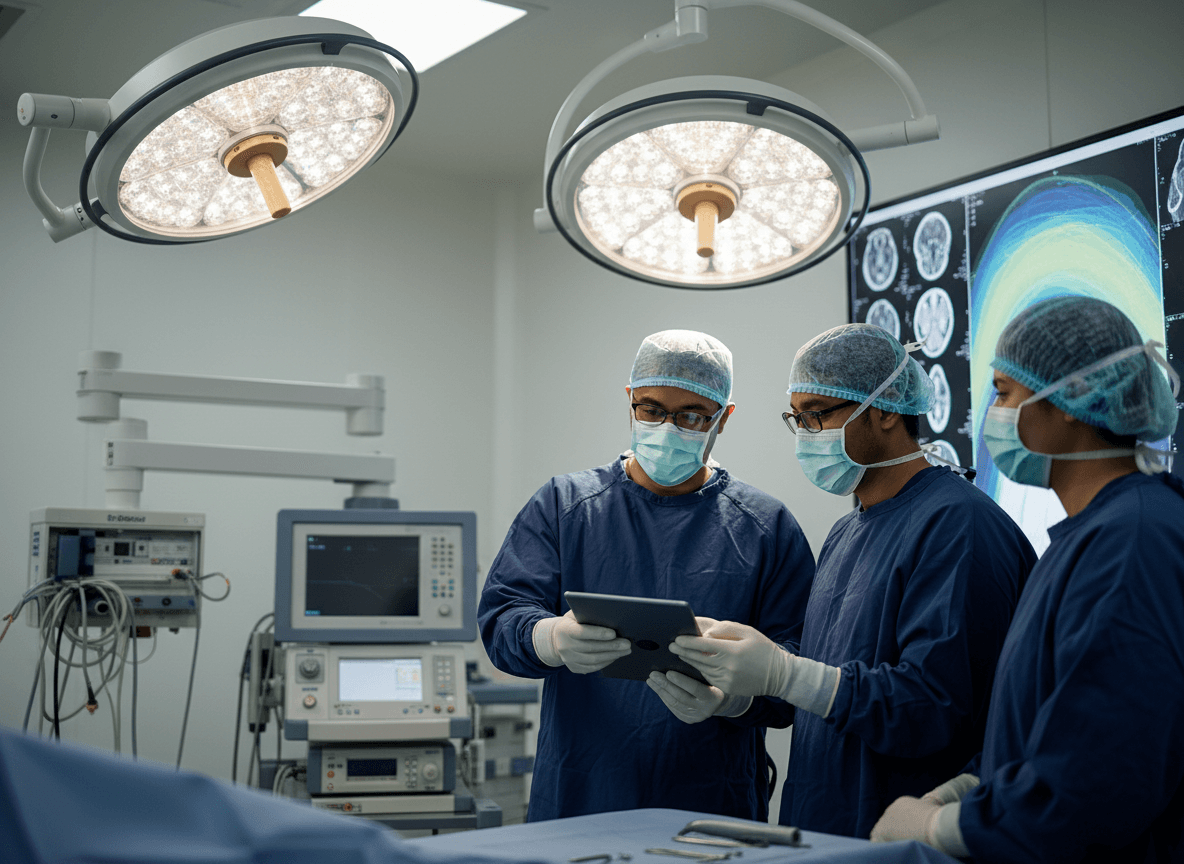
Low-level laser therapy photobiomodulation (LLLT) accelerates post-surgical bone healing, reduces pain and oedema, and improves implant osseointegration. Cellular mechanisms of action, dosimetry and validated clinical protocols.
Photobiomodulation (PBM), formerly designated LLLT (Low-Level Laser Therapy), is defined as the application of low-power monochromatic or polychromatic light (0.1–1 W in continuous or pulsed mode) on biological tissues for the purpose of cellular stimulation, without destructive thermal effect. Its first applications in bone biology date from 1984 (Karu et al., Soviet Union), but it is the decade 2010–2024 that has seen the accumulation of a body of Level I clinical evidence in implantology, periodontology and bone surgery. The most recent meta-analysis (Amid et al., Lasers in Medical Science, 2024, 67 RCTs, n = 3,214 patients) provides the reference framework for this review.
1. Cellular Mechanisms of Action of Photobiomodulation on Bone
The primary mechanism of action of PBM is photon absorption by mitochondrial cellular chromophores — principally cytochrome c oxidase (complex IV of the mitochondrial respiratory chain), which preferentially absorbs in the red (630–700 nm) and near-infrared (800–1,100 nm) spectral windows. This photonic absorption increases cytochrome c oxidase activity, leading to increased mitochondrial ATP production (+30–80% documented in vitro), stimulation of reactive oxygen species (ROS) at sub-lesional doses (paradoxical signalling effect), increase in membrane proton gradient, and release of dissociated nitric oxide (NO). These cascade effects induce downstream: osteoblast proliferation (+35–55% vs control), increased type I collagen synthesis (+40–60%), mineralisation stimulation (alkaline phosphatase +45%), accelerated vascularisation (VEGF +30–40%) and reduction of local cell apoptosis.
2. Dosimetry Parameters: The Therapeutic Window
Dosimetry (selection of PBM physical parameters) is the most complex and most often poorly mastered dimension of clinical practice. The biological response to PBM is biphasic (Arndt-Schulz law): insufficient at low dose, optimal at intermediate dose (therapeutic window), inhibitory at high dose. The critical parameters are: wavelength (λ), power (W), power density (irradiance — mW/cm²), exposure time (seconds), and energy density (fluence — J/cm²). The WALT consensus (World Association for Laser Therapy, 2024) for peri-implant bone healing recommends: λ = 808–830 nm (near-infrared diode) or 650–670 nm (red); fluence = 3–6 J/cm² per session; irradiance = 25–100 mW/cm²; continuous or pulsed mode 50 Hz; sessions D0 (perioperative), D1, D3, D7, D14; transcutaneous or direct intraoral application.
| Clinical application | Recommended λ | Fluence | Sessions | Evidence level (Amid 2024) |
|---|---|---|---|---|
| Implant osseointegration acceleration | 808–830 nm | 4 J/cm² | D0, D3, D7, D14 | Level I — meta-analyses |
| Post-extraction healing | 650–670 nm | 3–4 J/cm² | D0, D1, D3, D7 | Level I |
| Post-GBR / bone graft | 808 nm | 5–6 J/cm² | D0, D3, D7, D14, D21 | Level I |
| Peri-implantitis treatment | 808 nm + 980 nm | 4 + 3 J/cm² | 4–6 sessions / 3 weeks | Level II |
| Post-surgical pain and oedema reduction | 670 nm | 2–3 J/cm² | D0, D1, D2, D3 | Level I |
3. Clinical Results: Acceleration of Implant Osseointegration
The Amid et al. meta-analysis (2024) specifically evaluates the effect of post-implant PBM on ISQ (Implant Stability Quotient). Key results: ISQ gain at 8 weeks of 6.8 units (95% CI: 4.9–8.7 units) in the PBM group vs control (p < 0.001), corresponding to significantly earlier osseointegration. This gain is particularly notable in D3–D4 bone (ISQ gain of 9.2 vs 4.1 in D1–D2). Marginal bone loss at 12 months is reduced by 0.31 mm (95% CI: 0.18–0.44 mm) in the PBM group — clinically significant. The loading timeline can be reduced by 4–6 weeks compared to conventional protocols in series with systematic PBM.
4. Practical Integration into the Surgical Protocol
- Session 1 perioperative (D0): direct application on the implant site before flap closure — λ 808 nm, 4 J/cm², 60 s per implant, 400 µm fibre or direct intraoral probe
- Session 2 (D1 — next day): external transcutaneous application over the operated area — λ 808 nm, 4 J/cm², continuous mode, 90 s per quadrant
- Sessions 3 and 4 (D3 and D7): same transcutaneous protocol — simultaneous assessment of oedema and pain (VAS)
- Session 5 (D14 or D21 depending on healing): consolidation session — intraoral application if mucosal tissue accessible
- Documentation: systematically record parameters of each session (λ, power, area, duration, fluence) in patient file for reproducibility
- Required training: use of PBM in implant surgery requires specific dosimetry training — inhibitory effects of a light overdose are real and documented
Photobiomodulation is in 2024 a Grade A adjunctive therapeutic modality in implant surgery — no longer experimental, but clinically validated. Its systematic integration into the perioperative protocol improves osseointegration, reduces morbidity and shortens treatment timelines with no risk when dosimetry is mastered.
— Amid R. et al., Lasers in Medical Science, 2024
Editorial note
This article is written for scientific and professional monitoring purposes. The studies cited are drawn from peer-reviewed publications. Infinity Aligner does not endorse the results of third-party studies and recommends that professionals consult the original publications for any clinical application.
Infinity Aligner — Scientific team
Technology watch & dental literature review
More analyses
Mar 2026
Osteodensification and Bone Condensation in Implantology: Versah Technique, Condensation Osteotomes and Bone Quality Improvement Protocols in D3–D4 Bone
Mar 2026
Peri-Implantitis: Diagnosis, Implant Surface Decontamination and Surgical Bone Regeneration — Evidence-Based Protocols 2024
Mar 2026
Vertical Bone Augmentation in Implantology: Titanium Mesh (TiMesh), Alveolar Distraction Osteogenesis and Reinforced Membrane — Advanced Techniques, Learning Curves and Compared Results
Integrate innovation into your practice
Join the Infinity Aligner network and access the most advanced digital tools for your patients.
Become a partner