Vertical Bone Augmentation in Implantology: Titanium Mesh (TiMesh), Alveolar Distraction Osteogenesis and Reinforced Membrane — Advanced Techniques, Learning Curves and Compared Results
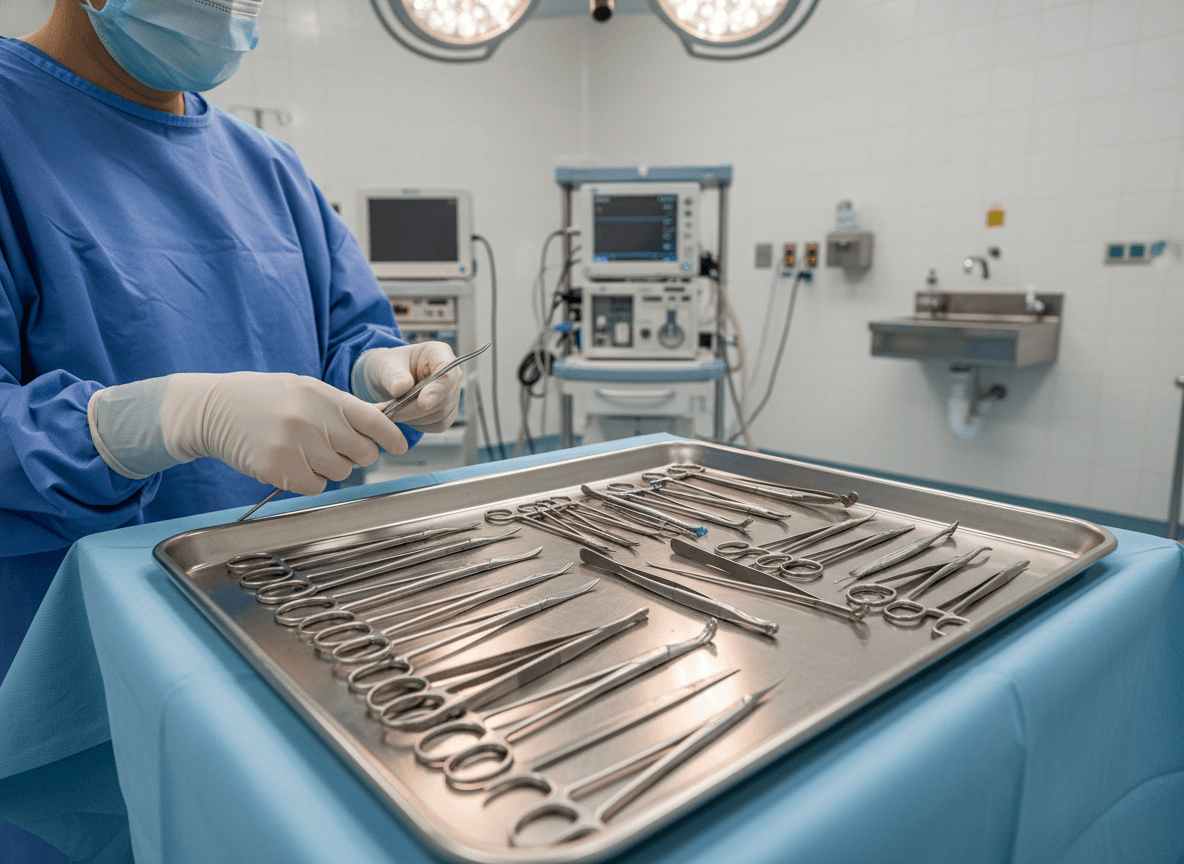
Vertical bone augmentation is the most demanding and least predictable procedure in pre-implant surgery. Titanium mesh, alveolar distraction osteogenesis and reinforced membranes constitute the three technical pillars for vertical gains > 4 mm with 10-year documented results.
Vertical bone augmentation — height gain on an atrophic resorbed ridge — is unanimously recognised as the most technically demanding and least predictable procedure in reconstructive implant surgery. A horizontal gain of 4–5 mm is now routine for a surgeon trained in GBR. A vertical gain of 5 mm, on the other hand, remains a major surgical challenge with significantly higher complication and failure rates. Three technical approaches have demonstrated efficacy in the literature for vertical gains > 4 mm: titanium mesh (TiMesh), alveolar distraction osteogenesis (ADO), and GBR with non-resorbable titanium-reinforced membrane. Their comparison is one of the most debated topics in implant surgery in 2024.
1. Titanium Mesh (TiMesh): The Reference for Significant Vertical Gain
The titanium mesh is a rigid three-dimensional structure in TiAl6V4 alloy, perforated, adaptable to the crestal morphology, fixed with titanium screws (1.5–2 mm) and creating a space beneath the mesh filled with biomaterial. Its fundamental advantage: maximum rigidity ensuring volumetric maintenance even under compression forces from the overlying soft tissues (estimated compression force 0.3–0.8 N/cm²). Next-generation meshes (Yxoss CBX® Reoss, KLS Martin; tMesh® Starmesh) are CAD/CAM custom-milled from the preoperative CBCT, eliminating the intraoperative manual conformation step and reducing surgical time by 25–35%. The Urban et al. meta-analysis (IJOMI 2024, 18 studies, 487 grafts) reports a mean vertical gain of 5.4 mm (95% CI: 4.8–6.0 mm), with a mesh exposure rate of 18.7% — the main limiting complication rate, but manageable in 72% of cases by local antisepsis without premature mesh removal.
2. Alveolar Distraction Osteogenesis (ADO): Living Bone Under Traction
Alveolar distraction osteogenesis is based on the Ilizarov principle (1954): surgically separating a bone segment (osteotomy) then progressively moving it away from the adjacent segment at 0.5–1 mm per day (distraction phase), thereby creating spontaneous bone regeneration in the distraction gap (distraction callus). In alveolar surgery, the transported segment is a crestal fragment displaced vertically by a screwed distractor. Major advantages: living neo-formed bone, biologically integrated, no biomaterial exposure risk; theoretically unlimited vertical gain (documented up to 12 mm); concomitant soft tissue expansion (gingiva and bone grow together). Limitations: two-stage procedure (distractor placement D0 + removal D60–90 and implant placement D90–120), patient tolerance (daily manual distraction by patient or carer — 0.5 mm × 2/day), axial deviation risk of the segment (requires distraction guide), device cost (€1,200–3,500). Mean vertical gain in meta-analysis: 5.8 mm (95% CI: 4.9–6.7 mm) — Urban et al. 2024.
| Technique | Mean vertical gain | Major complication rate | Number of interventions | Total implant timeline |
|---|---|---|---|---|
| TiMesh (CAD/CAM) | 5.4 mm (CI 4.8–6.0) | Exposure 18.7% / Infection 4.2% | 2 (placement + removal) | 6–9 months |
| Alveolar distraction osteogenesis | 5.8 mm (CI 4.9–6.7) | Axial deviation 8.5% / Fracture 2.1% | 2 + daily activation | 5–7 months |
| Titanium-reinforced membrane (e-PTFE) | 4.8 mm (CI 4.1–5.5) | Exposure 24.3% / Infection 6.8% | 2 (placement + removal) | 9–12 months |
| Collagen membrane GBR (resorbable) | 2.1 mm (CI 1.6–2.6) | Exposure 4.5% | 1 | 6 months |
| Block autograft (onlay) | 5.1 mm (CI 4.3–5.9) | Partial resorption 22% / Infection 5% | 2 | 4–6 months |
3. Cortical Onlay Block Graft (Autologous Block)
The cortical block onlay graft — harvested from the mental symphysis or mandibular ascending ramus — remains a valid approach for vertical gains of 3–5 mm, with excellent biological integration and controlled morbidity. The principle: rigid block fixation on the recipient ridge (bicortical 1.5 mm osteosynthesis screws), gap filling between block and ridge with xenograft particles, coverage with bioresorbable collagen membrane. Documented partial resorption: 22% by volume over 6 months (inevitable surface resorption phenomenon linked to temporary graft devascularisation). To counter this resorption, the combined block graft technique — cortical block as mechanical support + cancellous matrix filling + PRF coverage — is increasingly adopted in centres of excellence.
4. Technique Selection: Decision Tree
- Vertical gain < 3 mm: GBR with resorbable membrane + xenograft — first-line technique, minimal morbidity
- Vertical gain 3–5 mm, posterior site: Standard TiMesh or e-PTFE reinforced membrane + autograft/xenograft 30/70 mix
- Vertical gain 3–5 mm, anterior aesthetic site: Onlay block graft (symphysis) + collagen membrane for volumetric maintenance and aesthetic predictability
- Vertical gain 5–8 mm: Patient-specific CAD/CAM TiMesh or alveolar distraction osteogenesis (choice depending on patient compliance and residual bone volume)
- Vertical gain > 8 mm: Alveolar distraction osteogenesis ± supplementary graft, or microsurgical reconstruction (free bone flap — fibula flaps — for extreme cases)
Vertical bone augmentation remains the ultimate frontier of reconstructive implant surgery. Advances in patient-specific CAD/CAM meshes and renewed interest in distraction osteogenesis now allow vertical gains of 6–8 mm to be achieved in 2024 with increasing predictability.
— Urban IA et al., International Journal of Oral & Maxillofacial Implants, 2024
Editorial note
This article is written for scientific and professional monitoring purposes. The studies cited are drawn from peer-reviewed publications. Infinity Aligner does not endorse the results of third-party studies and recommends that professionals consult the original publications for any clinical application.
Infinity Aligner — Scientific team
Technology watch & dental literature review
More analyses
Mar 2026
Photobiomodulation (LLLT) and Bone Healing in Implantology: Clinical Evidence, Dosimetry Protocols and 2024 Post-surgical Applications
Mar 2026
Osteodensification and Bone Condensation in Implantology: Versah Technique, Condensation Osteotomes and Bone Quality Improvement Protocols in D3–D4 Bone
Mar 2026
Peri-Implantitis: Diagnosis, Implant Surface Decontamination and Surgical Bone Regeneration — Evidence-Based Protocols 2024
Integrate innovation into your practice
Join the Infinity Aligner network and access the most advanced digital tools for your patients.
Become a partner