Sinus Lift in Implantology: Tatum (Caldwell-Luc) Technique, Summers Crestal Approach and 2024 Innovations — Compared Protocols and Survival Data
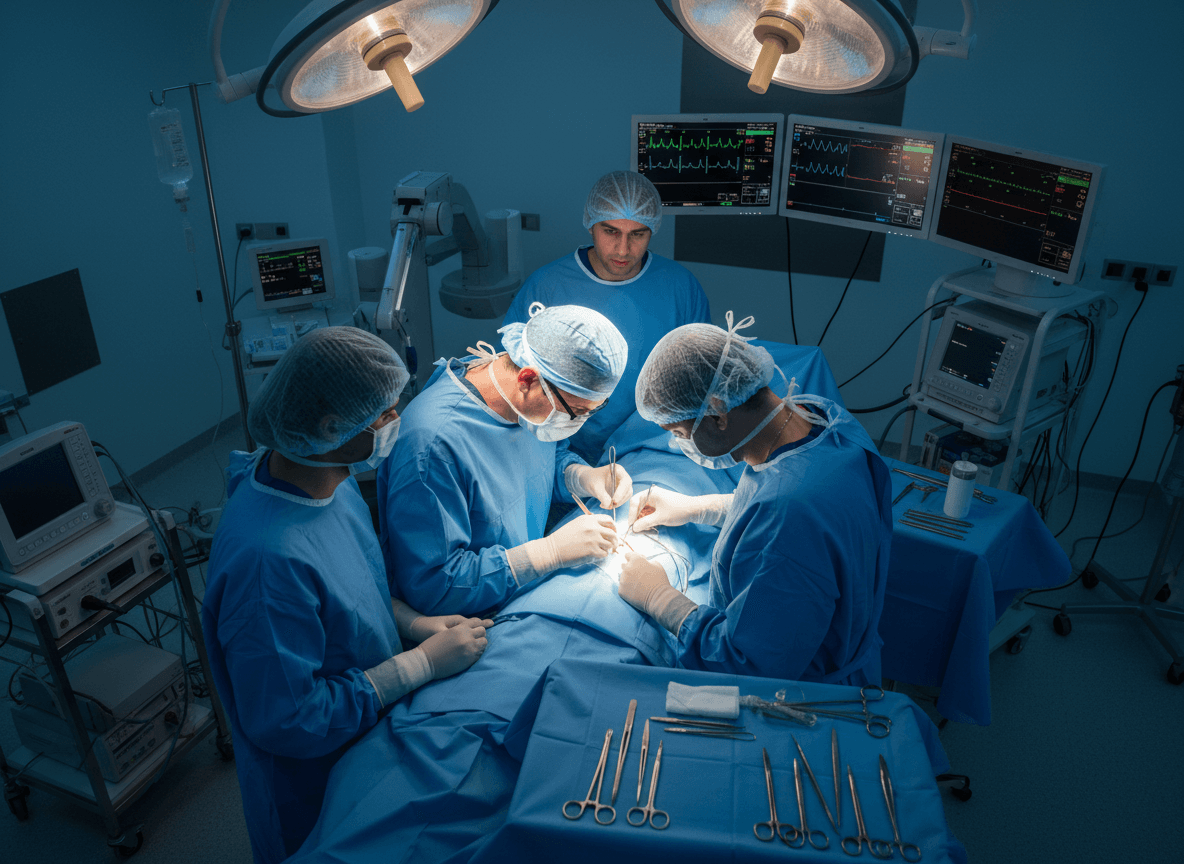
Sinus floor elevation is the most commonly performed bone grafting technique in implantology worldwide. The choice between lateral (bone window) and crestal (osteotome) approach depends on residual bone height and determines morbidity and treatment timelines.
Post-extraction bone resorption in the posterior maxillary sector, combined with maxillary sinus pneumatisation, creates an anatomical situation where available bone height is often insufficient (< 8 mm) for implant placement without prior augmentation. Sinus floor elevation is the surgical response to this constraint. More than 700,000 sinus lifts are performed annually worldwide, making this procedure the most frequent grafting technique in implantology. Two major approaches structure clinical practice: the lateral approach (historically attributed to Hilt Tatum Jr, 1977, and Boyne & James, 1980 — often called the Caldwell-Luc technique) and the transalveolar crestal approach (Summers, 1994).
1. Lateral Approach (Tatum Technique): Standard Protocol
The lateral approach is the reference technique for significant elevations (residual height < 5 mm) and large-volume grafts. The standard surgical protocol includes: crestal incision with mesial and distal vertical releases, full-thickness mucoperiosteal flap exposing the anterolateral maxillary face, bone window creation (rotary bur, piezosurgery or Er:YAG laser) preserving the Schneiderian membrane, careful membrane detachment with sinus curettes (critical technical skill), cavity filling with chosen biomaterial (xenograft alone with residual height ≥ 5 mm, autograft + xenograft with height < 5 mm), simultaneous (one-stage technique) or delayed (two-stage technique depending on primary stability) implant placement. Operating time: 45–90 minutes per hemimaxilla.
2. Crestal Approach (Summers Technique): Minimally Invasive
The transalveolar crestal approach with osteotomes (Summers, 1994) is indicated when residual bone height is ≥ 5–6 mm and the desired elevation is moderate (3–5 mm). The principle: introduction of conical osteotomes of increasing diameter (3.1 → 4.8 mm) via the crestal route (prepared implant site), compression and lateral condensation of sub-sinus bone, progressive upward displacement of the Schneiderian membrane by controlled percussion movements. Bone or substitute can be pushed in via the osteotome to increase volume. Advantages: minimally invasive, no bone window, reduced operating time (20–30 min), minimal post-operative course, systematic simultaneous implant placement. Limitations: residual height ≥ 5 mm mandatory, higher membrane perforation risk than lateral approach in inexperienced hands, reliable elevation gain limited to 3–5 mm.
| Parameter | Lateral approach (Tatum) | Crestal approach (Summers) | Piezoelectric approach (advanced) |
|---|---|---|---|
| Main indication | Bone height < 5 mm | Bone height 5–10 mm | All cases / delicate membranes |
| Reliable elevation gain | > 10 mm possible | 3–5 mm reliable | > 10 mm with precision |
| Membrane perforation rate | 10–24% (rotary bur) | < 10% | < 5% |
| Post-op morbidity | Moderate to high | Low | Low to moderate |
| Operating time | 45–90 min | 20–30 min | 40–70 min |
| Simultaneous implant placement | If height ≥ 4 mm + torque ≥ 30 N·cm | Systematic | If height ≥ 4 mm + torque ≥ 30 N·cm |
| Loading timeline | 4–6 months (if delayed) | 3–4 months (if simultaneous) | 4–6 months |
3. Complications: Schneiderian Membrane Perforation
The most feared intraoperative complication is sinus membrane perforation (Schneiderian membrane). Its incidence via the lateral approach ranges from 10 to 24% across series (Urban et al., COIR 2024), mainly during membrane detachment manoeuvres at sinus septa or membrane thickening zones. Perforation management depends on size: micro-perforation < 2 mm: continuation of the procedure with placement of a resorbable collagen membrane as inlay over the perforation; perforation 2–10 mm: obturation with collagen membrane patch + resorbable suture, then cautious continuation of filling; perforation > 10 mm: procedure discontinuation recommended, 3 months healing before new attempt. Post-operative data show that small perforations managed intraoperatively do not significantly affect 5-year implant survival rate (96.2% vs 97.4% — non-significant difference in the Pjetursson 2024 meta-analysis).
4. Implant Survival Data After Sinus Lift — 2024 Meta-analysis
| Studies / meta-analysis | N implants | Follow-up | Survival (lateral) | Survival (crestal) |
|---|---|---|---|---|
| Pjetursson et al. (COIR 2024) — meta-analysis 89 studies | 14,225 | 3–15 years | 96.1% (CI 95.2–97.0) | 95.8% (CI 94.6–97.0) |
| Del Fabbro et al. (Int J Oral Maxillofac Implants 2023) | 4,788 | 5 years | 97.2% | 96.4% |
| Aghaloo & Moy (IJOMI updated 2024) | 12,300 | 3–10 years | 95.6% | N/A |
Sinus floor elevation is one of the most documented surgical procedures in dental medicine. Its long-term implant survival rates are comparable to those of implants placed in native bone, definitively validating this technique as a standard of care in the atrophied posterior maxilla.
— Pjetursson BE et al., Clinical Oral Implants Research, 2024
Editorial note
This article is written for scientific and professional monitoring purposes. The studies cited are drawn from peer-reviewed publications. Infinity Aligner does not endorse the results of third-party studies and recommends that professionals consult the original publications for any clinical application.
Infinity Aligner — Scientific team
Technology watch & dental literature review
More analyses
Mar 2026
Photobiomodulation (LLLT) and Bone Healing in Implantology: Clinical Evidence, Dosimetry Protocols and 2024 Post-surgical Applications
Mar 2026
Osteodensification and Bone Condensation in Implantology: Versah Technique, Condensation Osteotomes and Bone Quality Improvement Protocols in D3–D4 Bone
Mar 2026
Peri-Implantitis: Diagnosis, Implant Surface Decontamination and Surgical Bone Regeneration — Evidence-Based Protocols 2024
Integrate innovation into your practice
Join the Infinity Aligner network and access the most advanced digital tools for your patients.
Become a partner