Autologous Bone Grafts in Implantology: Mental Symphysis, Retromolar Area and Iliac Crest — Protocols, Morbidities and Indications
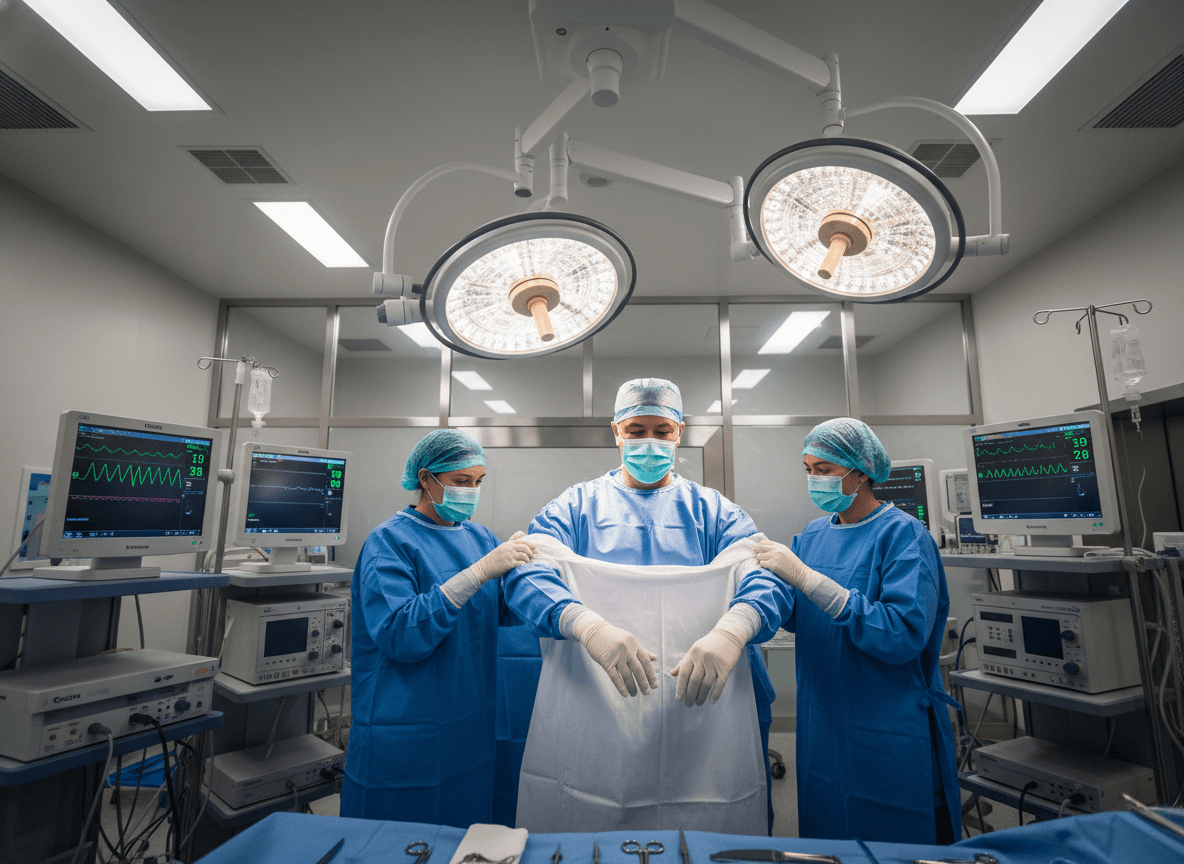
Autologous bone remains the only biomaterial combining osteoconduction, osteoinduction and osteogenesis. But the choice of donor site — intraoral (symphysis, retromolar) or extraoral (iliac crest, calvaria) — profoundly determines morbidity, available volume and surgical indications.
Despite the considerable growth of substitute biomaterials, autologous bone remains in 2024 the absolute gold standard in reconstructive bone surgery. The only biomaterial combining the three fundamental bone-forming properties — osteoconduction, osteoinduction and direct osteogenesis by its living bone-forming cells — it is irreplaceable in situations of large bone defects, significant vertical augmentation or maxillofacial reconstruction after resection. Knowledge of harvesting sites, their anatomy and associated morbidities is a fundamental surgical skill.
1. Symphyseal Harvesting: Intraoral Reference Site for Small to Medium Volumes
The mental symphysis is the intraoral reference harvesting site for moderate volumes (0.5 to 4 mL of cortical/cancellous bone). Symphyseal bone presents a thick dense cortical (2–4 mm) with a medullary cancellous component rich in bone-producing cells. Standard harvesting technique: vestibular mucosal incision 5 mm from attached gingiva in the parasymphyseal region (3-3), full-thickness mucoperiosteal flap with exposure of the vestibular symphyseal surface, graft delineation with spherical bur + oscillating saw (limits: 5 mm below apices, 5 mm from midline, 5 mm above inferior mandibular border), harvesting with bone chisel and osteotome. Main morbidities: mental nerve anaesthesia (temporary 4–12 weeks in 30–40% of cases, permanent in < 2%), post-operative pain (mean VAS D3: 4.2/10), chin profile modification (rare if limits respected), gingival recession adjacent to incisors (8–12%).
2. Retromolar Harvesting: Less Morbid Alternative for Small Volumes
The mandibular retromolar region (retromolar trigone, ascending ramus) provides more modest bone volumes (0.5 to 2 mL) but with significantly reduced morbidity. The bone here is predominantly cortical, dense, with osteoconductive healing. The main indication is GBR for small defects (1–3 teeth) not requiring a large block. Advantages: no mental nerve anaesthesia, anatomically isolated zone, direct access path. Limitations: low maximum volume, risk of lingual or inferior alveolar nerve injury if dissection is too posterior, difficult access in patients with limited mouth opening. The meta-analysis by Urban et al. (IJOMS 2024) compares the two intraoral sites: neurological complication rate 1.8% (retromolar) vs 7.2% (symphysis) — statistically significant difference (p = 0.018).
| Harvesting site | Available volume | Bone type | Neurological morbidity | Main indications |
|---|---|---|---|---|
| Mental symphysis | 0.5–4 mL | Cortico-cancellous | 2–40% (temporary) | Horizontal GBR, anterior augmentation |
| Retromolar (ramus) | 0.5–2 mL | Predominantly cortical | < 2% | Small defects, socket filling |
| Anterior iliac crest | 15–40 mL | Abundant cancellous | < 5% (cutaneous nerve) | Large vertical defects, total reconstruction |
| Posterior iliac crest | 40–80 mL | Cancellous +++ | < 3% | Major maxillofacial surgery |
| Calvaria (parietal bone) | 5–20 mL | Cortical | < 1% | Craniofacial reconstruction, severe maxillary atrophy |
| Proximal tibia | 10–25 mL | Cancellous | < 3% | Day-surgery alternative to iliac harvesting |
3. Iliac Crest: Reference Site for Large Volumes
The anterior superior iliac crest is the reference harvesting site when large bone volumes are needed (severe maxillary atrophy Cawood & Howell class VI, total arch reconstruction after resection). It provides abundant cancellous volume (15–40 mL per anterior harvest, up to 80 mL for posterior harvest) with high osteogenic potential thanks to rich bone marrow. The procedure is performed under general anaesthesia with two simultaneous surgical teams (maxillofacial + iliac harvesting). Morbidities: harvesting site pain persisting 3–6 weeks (main patient-reported limitation), transient limping 1–3 weeks, haematoma (5–8%), abdominal hernia (< 1%), lateral femoral cutaneous nerve injury (meralgia paraesthetica, 2–5%).
4. Autologous Graft Management: Conservation and Biological Optimisation
- Graft preservation between harvest and placement: sterile 0.9% saline at 4°C — maximum delay 20 minutes recommended (cell viability drops 15% per additional 10-minute increment)
- Optimal mixing with bone substitute: autograft 20–30% + xenograft/allograft 70–80% = optimal volume/biology compromise for vertical augmentation cases > 5 mm (Urban et al., EAO Consensus 2023)
- Cortical graft fragmentation: bone mill or bone scraper (Safescraper Twist®) to convert cortical blocks into shavings increasing cellular contact surface
- Platelet-Rich Fibrin (PRF) as supplement: Choukroun protocol (2700 rpm × 12 min) — addition of PRF membranes to bone mix for PDGF, TGF-β1 and IGF-1 release over 7–14 days (documented improvement of early vascularisation)
- Block graft fixation: temporary titanium fixation screws (osteosynthesis screws 1.2–1.5 mm) — removed at 6–9 months during implant placement
- Systematic membrane coverage: resorbable collagen membrane or non-resorbable e-PTFE depending on volume and access
Autologous grafting remains the gold standard in pre-implant surgery. Its reasoned combination with bone substitutes and membrane growth factors (PRF, BMP-2) optimises the ratio of volume obtained to morbidity imposed on the patient.
— Urban IA et al., International Journal of Oral & Maxillofacial Surgery, 2024
Editorial note
This article is written for scientific and professional monitoring purposes. The studies cited are drawn from peer-reviewed publications. Infinity Aligner does not endorse the results of third-party studies and recommends that professionals consult the original publications for any clinical application.
Infinity Aligner — Scientific team
Technology watch & dental literature review
More analyses
Mar 2026
Photobiomodulation (LLLT) and Bone Healing in Implantology: Clinical Evidence, Dosimetry Protocols and 2024 Post-surgical Applications
Mar 2026
Osteodensification and Bone Condensation in Implantology: Versah Technique, Condensation Osteotomes and Bone Quality Improvement Protocols in D3–D4 Bone
Mar 2026
Peri-Implantitis: Diagnosis, Implant Surface Decontamination and Surgical Bone Regeneration — Evidence-Based Protocols 2024
Integrate innovation into your practice
Join the Infinity Aligner network and access the most advanced digital tools for your patients.
Become a partner