Guided Bone Regeneration (GBR): Barrier Membranes, Biological Principles and Success Factors in Peri-implant Surgery
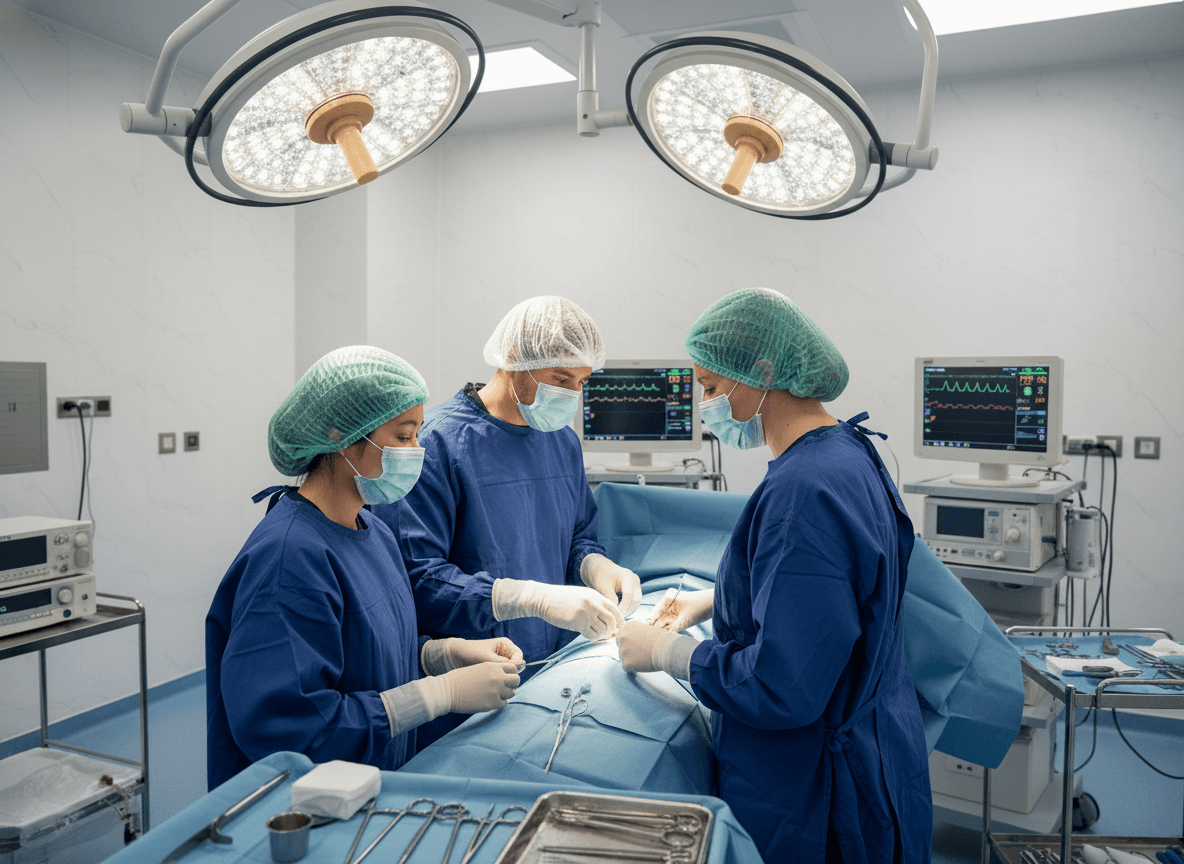
GBR is based on a fundamental biological principle: excluding fast-migrating epithelial and connective tissue cells from the regeneration space to allow bone-forming cells to colonise it alone. Resorbable vs non-resorbable membranes, space management and success factors — a complete review for the practitioner.
Guided bone regeneration (GBR) is a surgical technique based on the concept of selective cell exclusion, formalised by Dahlin et al. in 1988 in work that earned the Scandinavian team international recognition. Its fundamental biological principle is elegant in its simplicity: a barrier membrane placed between soft tissue (epithelium and connective tissue) and the bone defect prevents downward migration of epithelial and fibroblastic cells — whose colonisation rate exceeds that of osteoblasts by 10 to 15 days — and creates a protected space where only osteoprogenitor cells derived from the periosteum and endosteum can differentiate. Thirty-five years after its first descriptions, GBR remains the most scientifically documented bone augmentation technique in implantology.
1. Non-resorbable Membranes: Historical Reference
Expanded polytetrafluoroethylene membranes (e-PTFE — Gore-Tex®) were the first clinically validated GBR membranes. Major advantages: superior volume maintenance over long periods, guaranteed cell impermeability, possibility of titanium reinforcements to create large three-dimensional spaces (titanium-reinforced membranes — TiMesh, Yxoss CBX). Major limitation: requirement for a second surgical intervention for removal, and increased membrane exposure risk (15–25% at 6 months) leading to bacterial contamination and partial loss of bone gain. In 2024, dense PTFE membranes (d-PTFE — Cytoplast® by Osteogenics) have partially superseded e-PTFE: their ultra-smooth surface inhibits bacterial colonisation even when exposed, allowing the membrane to remain exposed for 4–6 weeks in some cases without clinically significant infection.
2. Bioresorbable Membranes: Practicality and Clinical Equivalence
Current bioresorbable membranes fall into two main families. Natural collagen membranes (Bio-Gide® by Geistlich, Jason® membrane by Botiss, Ossix® Plus) are derived from bovine or porcine type I/III collagen, resorbed by tissue collagenases in 16–24 weeks depending on thickness and crosslinking. Their asymmetric bilayer structure (smooth occlusive face on the soft tissue side, porous osteoconductive face on the bone side) is the reference design. Synthetic resorbable PLA/PLGA membranes (Mem-Lok® Pliable, Resolut Adapt®) offer more predictable resorption by hydrolysis over 6–12 months but slightly inferior biocompatibility compared to collagen membranes in comparative studies. The meta-analysis by Chen et al. (JCP 2024, 52 RCTs, n = 2,891 sites) concludes statistically non-significant clinical equivalence between resorbable and non-resorbable membranes for horizontal defects < 4 mm. For vertical defects > 4 mm, non-resorbable reinforced membranes retain a significant clinical advantage (additional vertical gain: +1.8 mm, p = 0.002).
| Membrane type | Resorption | Space maintenance | Exposure risk | Second surgery |
|---|---|---|---|---|
| e-PTFE (Gore-Tex®) | Non-resorbable | +++ | High (15–25%) | Yes — mandatory |
| d-PTFE (Cytoplast®) | Non-resorbable | +++ | Moderate (8–15%) | Yes |
| Titanium mesh (TiMesh) | Non-resorbable | ++++ | Moderate (10–18%) | Yes |
| Bovine collagen (Bio-Gide®) | Resorbable (16–24 wks) | ++ | Low (3–5%) | No |
| Crosslinked collagen (Ossix® Plus) | Resorbable (26–38 wks) | +++ | Low (4–7%) | No |
| PLA/PLGA synthetic | Resorbable (24–52 wks) | ++ | Low (5–8%) | No |
3. Critical GBR Success Factors
- Tension-free primary closure — criterion #1: any tension on the closing flap (> 0.5 N resistance to palpation) is associated with marginal necrosis and early membrane exposure
- Membrane stability — total immobility of the membrane during the initial healing phase (4–6 weeks): fixation with titanium screws or tacks if displacement risk exists
- Space maintenance — the membrane must create and maintain a dead space beneath it, not collapsed against the bone. Techniques: particulate bone graft support (xenograft), cortical bone pins, or titanium-reinforced membrane
- Adequate vascularisation — systematic bone decortication with round bur (tapping/perforations) to open Haversian canals and recruit progenitor cells from the underlying bone marrow
- Absence of bacterial contamination — pre- and post-operative antibiotic prophylaxis, 0.2% chlorhexidine rinse, strict hygiene protocol with weekly mouthwash for 6 weeks
- Sufficient healing time — minimum 6 months for horizontal GBR before implant placement, 9–12 months for significant vertical GBR
4. Case Study: Horizontal GBR of the Anterior Maxillary Ridge
The most common clinical situation in aesthetic implantology involves post-extraction vestibular bone deficit in the anterior maxillary zone (sector 1-1 to 2-3). The current reference protocol (Buser et al., 2023; Hämmerle et al., 2024) includes: implant placement within available bone limits (Straumann BLT HA implant ± socket shield if healthy residual root), peri-implant space filling with Bio-Oss® particles 0.25–1 mm, coverage with double-layer Bio-Gide® membrane using the Roll Technique, tension-free suturing with horizontal mattress sutures and simple sutures in non-resorbable Prolene 5-0. 3-year outcome data: mean horizontal gain 4.3 mm, implant survival rate 98.8%, objective aesthetic result (Pink Esthetic Score) ≥ 10/14 in 82% of cases.
GBR is today a mature surgical technique with the highest level of evidence in pre-implant surgery. Its long-term results are comparable to those of autograft for moderate-size defects, without the morbidities associated with harvesting.
— Hämmerle CHF & Tarnow D., Journal of Clinical Periodontology, 2024
Editorial note
This article is written for scientific and professional monitoring purposes. The studies cited are drawn from peer-reviewed publications. Infinity Aligner does not endorse the results of third-party studies and recommends that professionals consult the original publications for any clinical application.
Infinity Aligner — Scientific team
Technology watch & dental literature review
More analyses
Mar 2026
Photobiomodulation (LLLT) and Bone Healing in Implantology: Clinical Evidence, Dosimetry Protocols and 2024 Post-surgical Applications
Mar 2026
Osteodensification and Bone Condensation in Implantology: Versah Technique, Condensation Osteotomes and Bone Quality Improvement Protocols in D3–D4 Bone
Mar 2026
Peri-Implantitis: Diagnosis, Implant Surface Decontamination and Surgical Bone Regeneration — Evidence-Based Protocols 2024
Integrate innovation into your practice
Join the Infinity Aligner network and access the most advanced digital tools for your patients.
Become a partner