Clear Aligners vs Braces: Complete Comparison
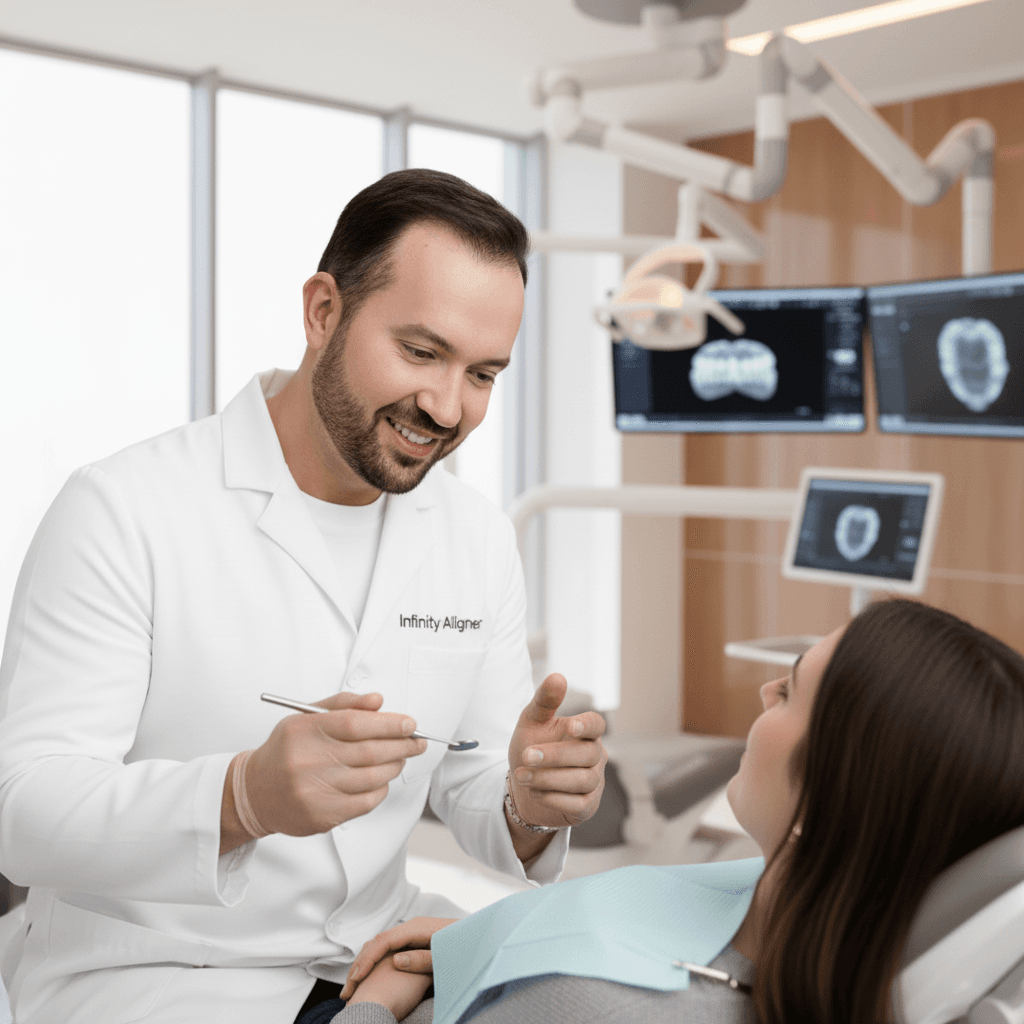
Clear aligners or braces? Complete comparison on comfort, effectiveness, price, duration and aesthetics to help you choose the right orthodontic treatment.
The question comes up in almost every orthodontic consultation: clear aligners or metal braces? Each option has its advantages. This objective comparison helps you make the most suitable choice for your case, lifestyle and budget.
Quick comparison table
| Criterion | Clear aligners | Orthodontic braces |
|---|---|---|
| Aesthetics | Nearly invisible | Visible (metal or ceramic) |
| Comfort | Smooth edges, no metal | Brackets can irritate |
| Removable | Yes (for eating, brushing) | No — fixed 24/7 |
| Effectiveness | Mild to moderate cases | All cases including complex |
| Duration | 6 to 18 months | 12 to 24 months average |
| Hygiene | Easy — removable aligners | More complex around brackets |
| Price in Tunisia | Accessible (varies by case) | Generally less expensive |
| Follow-up required | Every 6–8 weeks | Every 4–6 weeks |
Clear aligners: who are they for?
Clear aligners are particularly suitable for adults and teenagers with mild to moderate corrections: crowding, spacing, mild overbite or underbite. They are also ideal for people whose professional or social activity involves a polished appearance.
- Professionals in contact with the public (teachers, salespeople, managers)
- Patients wanting total discretion during treatment
- Adults wanting to correct post-brace relapse
- People practising contact sports
- Patients with metal allergies
Braces: who are they for?
Braces remain the reference for complex cases requiring precise and powerful tooth movements: major rotations, marked intrusions-extrusions, severe Class II or III corrections. They are also recommended for patients who risk lacking discipline in wearing aligners.
- Severe or skeletal malocclusions
- Children and young teenagers (still growing)
- Cases requiring multiple tooth extractions
- Patients with uncertain compliance
Wear compliance: decisive factor for aligners
The main risk with clear aligners is insufficient wear. Trays must be worn 20 to 22 hours per day to be effective. If you tend to forget or fear lacking motivation, braces — worn permanently — may be more suitable. However, if you are disciplined, aligners offer an equivalent result with incomparable comfort and aesthetics.
Conclusion: no absolute right or wrong choice
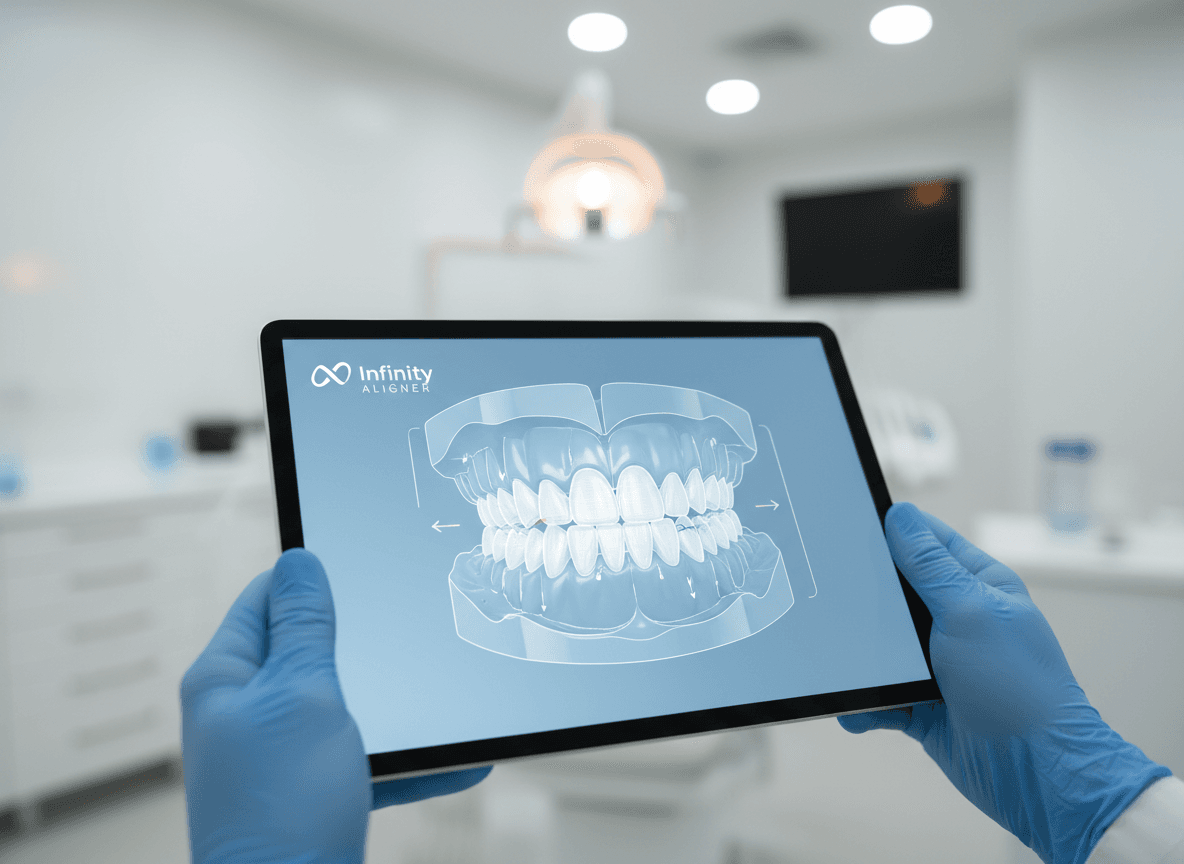
The best treatment is the one that matches your clinical case, lifestyle and compliance level. Consult a certified Infinity Aligner dentist for a personalised assessment — and benefit from a 3D simulation of your final smile before deciding.
Infinity Aligner
Clinical & editorial team
More articles
How to Choose Clear Aligners in Tunisia

How Much Do Clear Aligners Cost in Tunisia?
How Long Does Clear Aligner Treatment Take?
How to Clean and Care for Your Clear Aligners Daily
Clear Aligners for Teenagers: What Parents Need to Know
Gap Teeth & Diastema: Can Clear Aligners Fix Them?
Can You Play Sports with Clear Aligners?
3D Smile Simulation: How It Works and What to Expect
Orthodontic Relapse: Why Teeth Move After Treatment
Intraoral Scanner vs Traditional Impressions: What's the Difference?
Clear Aligners for Adults: Is It Ever Too Late?
Wisdom Teeth and Clear Aligners: Are They Compatible?

Clear Aligners: A Versatile Therapeutic Approach in Orthodontics
Orthodontics and Periodontal Health: What Every Patient Needs to Know
The Technology Behind Clear Aligners: From Design to Tray

How to Prepare for Your Orthodontic Consultation: 10 Questions to Ask
Bruxism and Clear Aligners: Can You Correct and Protect at the Same Time?

Class II Malocclusion and Clear Aligners: What Treatment Options Exist?
Clear Aligners and Dental Implants: Protocol, Timing and Clinical Cases
Digital Workflow and Aligner Biomechanics: The Advanced Practitioner Protocol
The Limits of Clear Aligners: Identifying Complex Cases Beyond Their Reach
Aligner Manufacturing: Thermoforming, 3D Printing and Polymer Science
Invisible Orthodontics in 2030: Predictive AI, Direct Printing and Active Materials
Smile Without Borders: The Price of Aligners Between Tunisia, Europe and Canada
Attachments in Invisible Orthodontics: The Silent Levers of Biomechanics

The Smile Beyond the Mirror: The Profound Impact of Dental Alignment on Psychological Well-being
Tunisia: The New Eldorado of Digital Dentistry and Medical Tourism
Post-Orthodontic Retention: The Forgotten Step That Decides Everything
What You Can (and Cannot) Eat With Clear Aligners
Teeth Whitening and Clear Aligners: Can You Treat and Whiten at the Same Time?
TMJ and Clear Aligners: How Invisible Orthodontics Acts on Jaw Pain
The Different Types of Dental Retainer: A Complete Guide After Orthodontic Treatment
The hidden dangers of metal braces: what patients need to know
Root resorption: the silent risk of poorly managed orthodontic treatments

Orthodontics and cavities: how metal braces compromise dental hygiene

Orthodontic relapse: why teeth return to their original position
Braces and chronic pain: the underestimated impact on daily quality of life
Intraoral scanner vs conventional impressions: dimensional analysis and clinical implications
CAD/CAM digital workflow in orthodontics: from intraoral scanning to aligner fabrication
Deformation, shrinkage and cumulative errors: why the conventional impression chain compromises aligner precision
Intraoral Scanners 2025: Complete Technical and Metrological Comparison
Why Choose Infinity Aligner? The Complete Guide for Dental Practitioners
Composite Selection for Aligner Attachments: Mechanical Analysis and Clinical Protocol
TMJ and Malocclusion: Differential Diagnosis and Clinical Approach for the Practitioner
Travelling with Clear Aligners: The Complete Guide for Stress-Free Trips
The First Month with Aligners: What to Expect Week by Week
Pre-Prosthetic Orthodontics: Preparing the Site Before Implants or Veneers
Consult a certified dentist
Our 200+ certified partners in Tunis, Sfax, Sousse and the francophone zone welcome you.
Book a consultation