Orthodontic relapse: why teeth return to their original position

Orthodontic relapse affects the majority of patients after brace treatment. Why do results not hold? How to effectively prevent teeth from shifting back?
One of the most frustrating topics in orthodontics is relapse: the phenomenon by which teeth, after being moved to an ideal position, tend to return — partially or totally — to their pre-treatment position. Long-term studies show that significant relapse affects up to 70% of patients within 10 years of completing a conventional orthodontic treatment. Understanding why it occurs is the key to preventing it.
1. The biological mechanisms of relapse
When a tooth is moved by an orthodontic appliance, the periodontal ligament and alveolar bone progressively remodel to adapt to the new position. But this remodelling is not instantaneous. During the months — sometimes years — following the end of active treatment, the collagen fibres of the periodontal ligament have an "elastic memory" that tends to bring the tooth back to its original position. This is why the retention phase — wearing retainers — is biologically essential at the end of any orthodontic treatment.
2. The main causes of relapse
- Premature abandonment of retainer wear (removable plates or bonded retainer)
- Poorly fitting retainers or retainers not replaced after breakage
- Continued jaw growth in young patients (mandibular growth continues until age 25)
- Soft tissue pressure: the tongue, lips and cheeks exert permanent forces on the teeth
- Late eruption of wisdom teeth pushing the rest of the arch forward
- Untreated parafunctional habits: bruxism, thumb sucking, atypical swallowing
- Deficient initial planning: treatment not respecting the patient's muscular and functional balance
3. Relapse and conventional orthodontics: a structural problem
Relapse is more frequent and more pronounced after metal brace treatment than after clear aligner treatment, for several reasons. First, brace treatments are often longer, exposing the patient more to non-compliance risks for subsequent retention. Second, tooth movement with fixed appliances is often less precise in terms of three-dimensional control of the final position of each tooth — an imprecision that favours relapse. Finally, extraction treatments (removing premolars to create space) practised more frequently in conventional orthodontics have documented higher relapse rates than non-extraction treatments.
4. Retention: the keystone of lasting results
No orthodontic treatment — regardless of the appliance used — eliminates the need for a retention phase. The two main retention strategies are:
- Removable retainer: Hawley plate or thermoformed tray (essentially nocturnal after the first months)
- Bonded retainer (retaining wire): thin metal wire bonded to the inner surface of the incisors, discreet and permanent
- Combined approach: bonded for the lower arch, removable for the upper (or vice versa depending on anatomy)
The recommended retention duration has evolved: current standards recommend lifelong retention (bonded retainer) or at minimum nocturnal retention for several years. The patient must be informed of this from the beginning of treatment.
5. Clear aligners and integrated retention
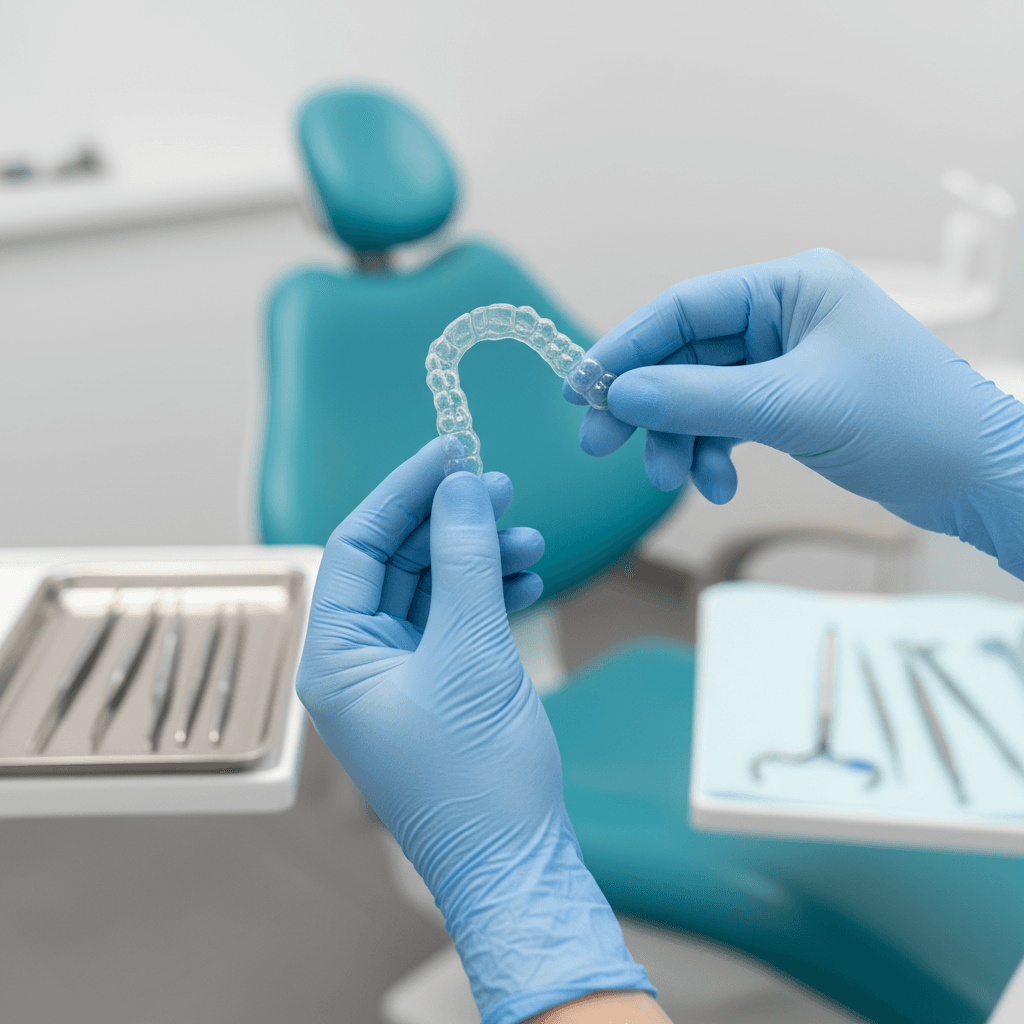
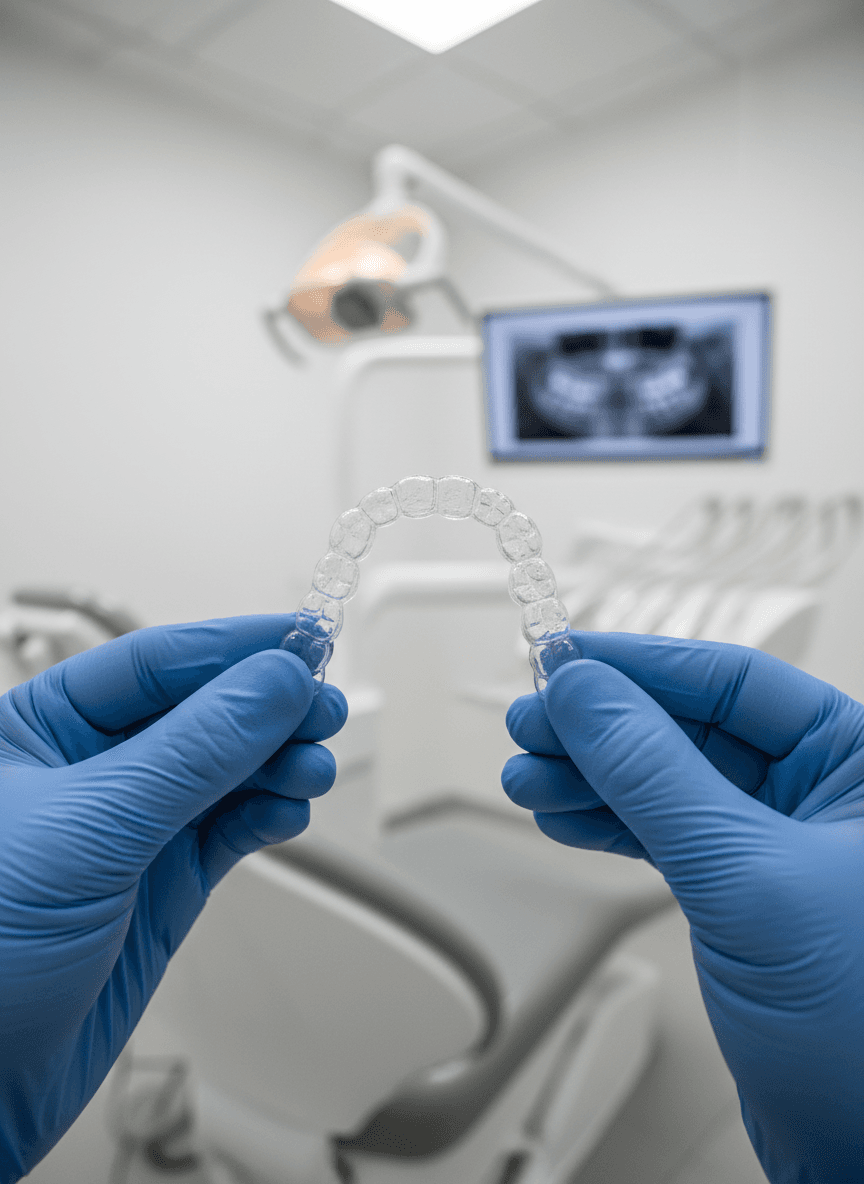
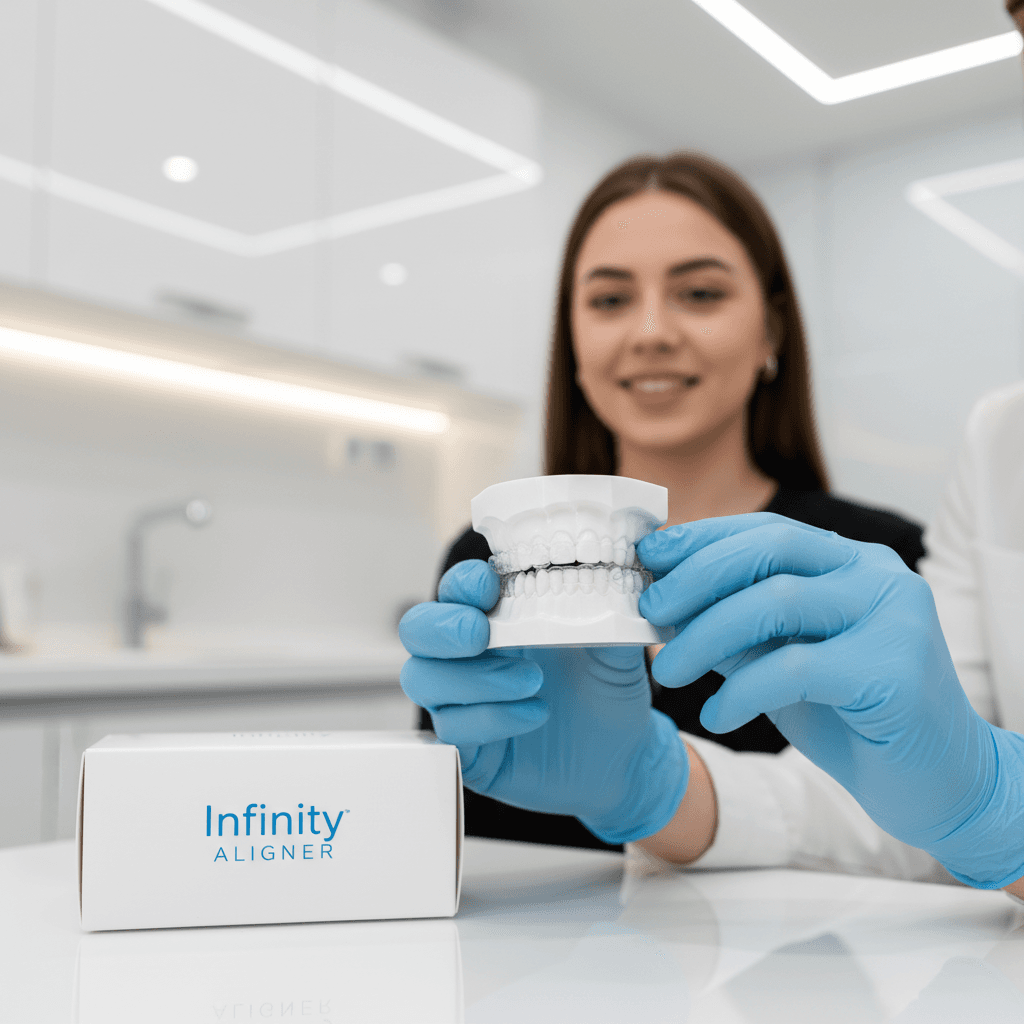
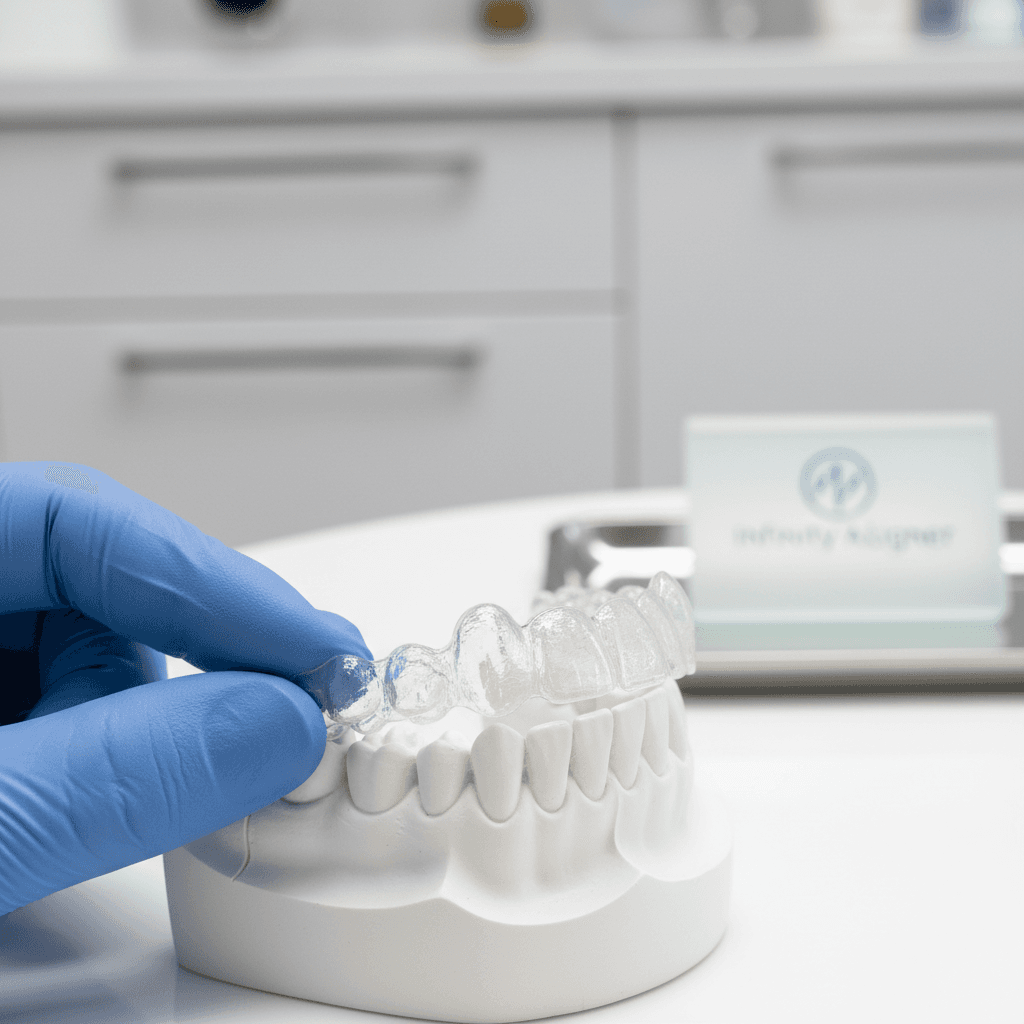
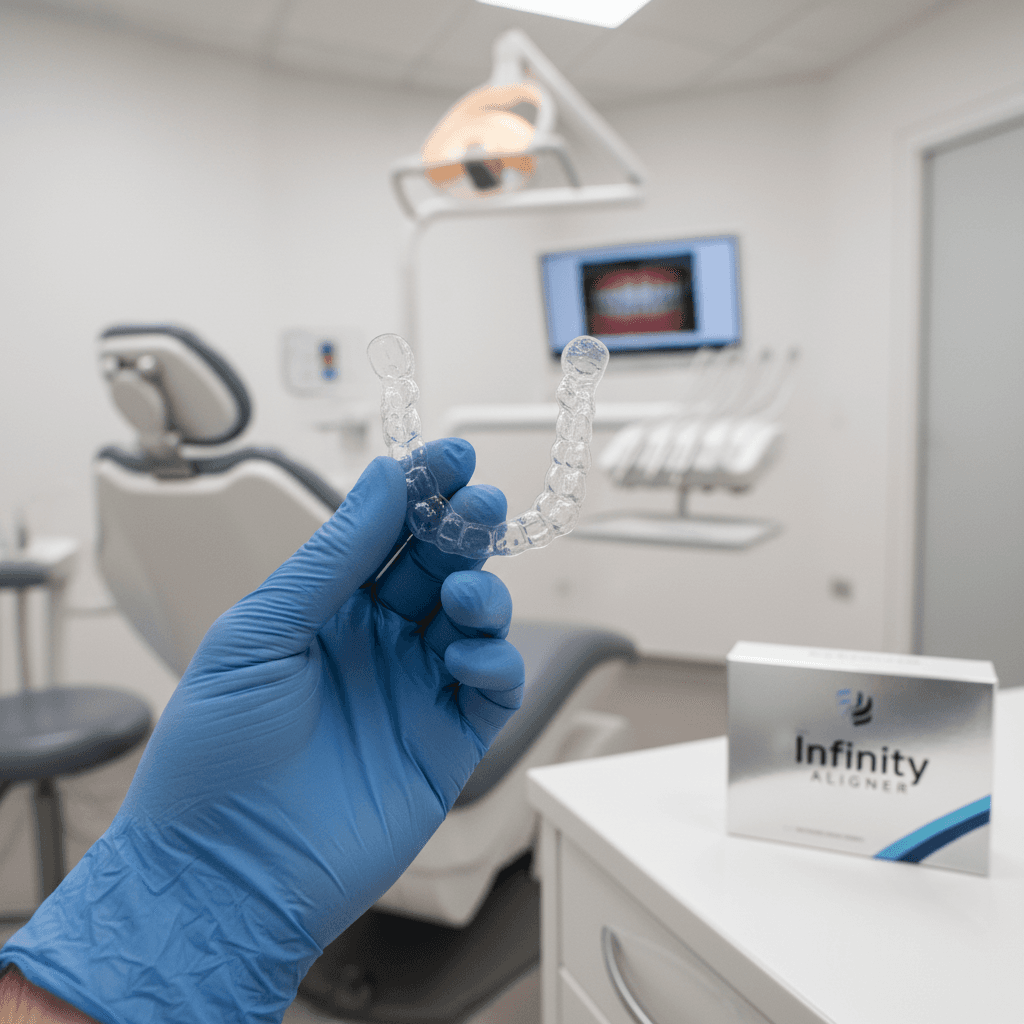
A little-known advantage of clear aligner treatments is the possibility of using the last trays of treatment as provisional retainers, before manufacturing a definitive retainer. Infinity Aligner integrates a personalised retention tray delivered with each completed treatment into its protocols, optimising patient compliance and reducing the risk of relapse during the critical months following the end of active treatment.
Conclusion
Orthodontic relapse is a real and documented risk, but largely preventable. It is the consequence of inadequate retention, imprecise initial planning or untreated biological factors. Require a clear retention plan from your practitioner even before starting your orthodontic treatment, and choose a system that integrates this dimension into its overall protocol.
Infinity Aligner
Clinical & editorial team
More articles
How to Choose Clear Aligners in Tunisia
Clear Aligners vs Braces: Complete Comparison
How Much Do Clear Aligners Cost in Tunisia?
How Long Does Clear Aligner Treatment Take?
How to Clean and Care for Your Clear Aligners Daily
Clear Aligners for Teenagers: What Parents Need to Know
Gap Teeth & Diastema: Can Clear Aligners Fix Them?
Can You Play Sports with Clear Aligners?
3D Smile Simulation: How It Works and What to Expect

Orthodontic Relapse: Why Teeth Move After Treatment
Intraoral Scanner vs Traditional Impressions: What's the Difference?

Clear Aligners for Adults: Is It Ever Too Late?
Wisdom Teeth and Clear Aligners: Are They Compatible?

Clear Aligners: A Versatile Therapeutic Approach in Orthodontics

Orthodontics and Periodontal Health: What Every Patient Needs to Know
The Technology Behind Clear Aligners: From Design to Tray

How to Prepare for Your Orthodontic Consultation: 10 Questions to Ask
Bruxism and Clear Aligners: Can You Correct and Protect at the Same Time?

Class II Malocclusion and Clear Aligners: What Treatment Options Exist?
Clear Aligners and Dental Implants: Protocol, Timing and Clinical Cases
Digital Workflow and Aligner Biomechanics: The Advanced Practitioner Protocol

The Limits of Clear Aligners: Identifying Complex Cases Beyond Their Reach
Aligner Manufacturing: Thermoforming, 3D Printing and Polymer Science
Invisible Orthodontics in 2030: Predictive AI, Direct Printing and Active Materials

Smile Without Borders: The Price of Aligners Between Tunisia, Europe and Canada
Attachments in Invisible Orthodontics: The Silent Levers of Biomechanics

The Smile Beyond the Mirror: The Profound Impact of Dental Alignment on Psychological Well-being
Tunisia: The New Eldorado of Digital Dentistry and Medical Tourism
Post-Orthodontic Retention: The Forgotten Step That Decides Everything
What You Can (and Cannot) Eat With Clear Aligners
Teeth Whitening and Clear Aligners: Can You Treat and Whiten at the Same Time?
TMJ and Clear Aligners: How Invisible Orthodontics Acts on Jaw Pain
The Different Types of Dental Retainer: A Complete Guide After Orthodontic Treatment
The hidden dangers of metal braces: what patients need to know
Root resorption: the silent risk of poorly managed orthodontic treatments

Orthodontics and cavities: how metal braces compromise dental hygiene

Braces and chronic pain: the underestimated impact on daily quality of life
Intraoral scanner vs conventional impressions: dimensional analysis and clinical implications
CAD/CAM digital workflow in orthodontics: from intraoral scanning to aligner fabrication
Deformation, shrinkage and cumulative errors: why the conventional impression chain compromises aligner precision
Intraoral Scanners 2025: Complete Technical and Metrological Comparison
Why Choose Infinity Aligner? The Complete Guide for Dental Practitioners
Composite Selection for Aligner Attachments: Mechanical Analysis and Clinical Protocol
TMJ and Malocclusion: Differential Diagnosis and Clinical Approach for the Practitioner
Travelling with Clear Aligners: The Complete Guide for Stress-Free Trips
The First Month with Aligners: What to Expect Week by Week
Pre-Prosthetic Orthodontics: Preparing the Site Before Implants or Veneers
Consult a certified dentist
Our 200+ certified partners in Tunis, Sfax, Sousse and the francophone zone welcome you.
Book a consultation